
Concrete Sealing & Surface Protection Brooklyn, NY
Concrete sealing is a surface treatment that stops water, road salt, and oil from soaking into the pores of a concrete slab. South Asian Construction Co. handles concrete sealing in Brooklyn and Queens for driveways, stoops, patios, garage floors, and rear yard slabs. We look at the surface on site, tell you honestly whether sealing is worth the spend on your concrete, and put the price in writing before anyone opens a pail. If the slab needs repair first, we say so instead of sealing over the problem.
See the full range of concrete services across Brooklyn and Queens.
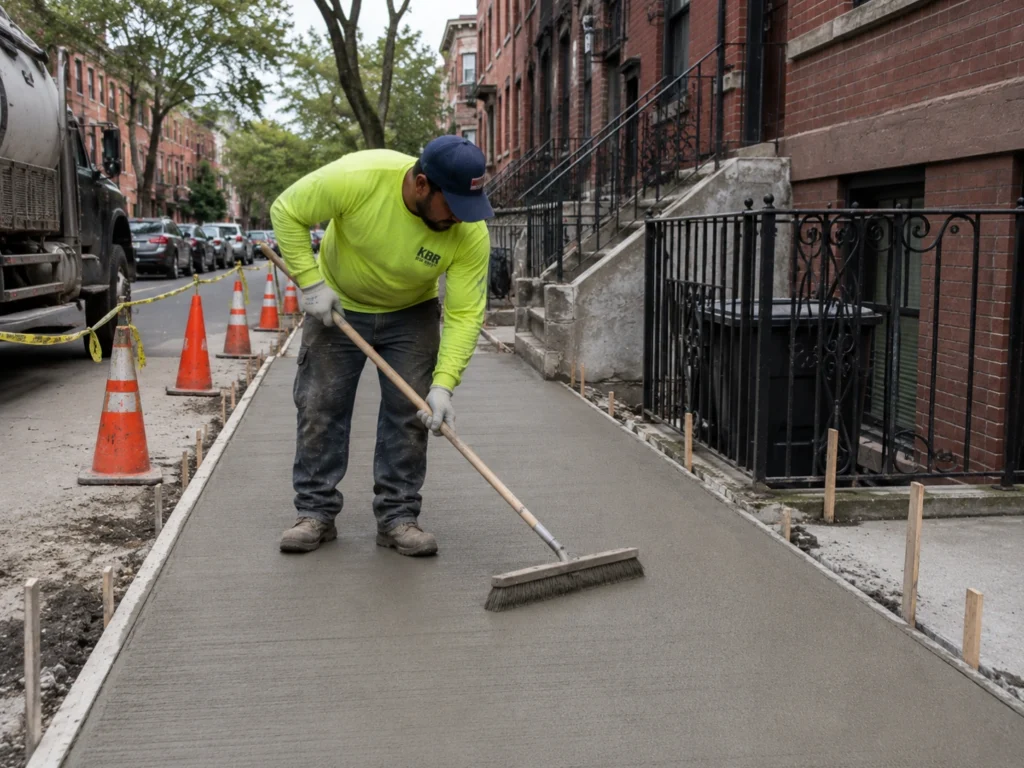


What Brooklyn Clients Say About Our Concrete Work
Noor and his team are fast and efficient, all at a fair price. Noor is very clear about what work will be done and sets your expectations very clearly so there's no misunderstanding about the process and details why things are done. I recommend him and his team's services. I've attached some before and after pics.
Sam C.
Brooklyn

Noor and his team are great! Quick, responsive, and experienced. Highly recommend him and his team.
Samuel W.
Brooklyn
They did excellent work and kept me informed of any issues that needed attention. Would definitely recommend for any project you have. Also offers competitive rates.
Jermaine C.
Brooklyn
Did a great job sealing the cracks of my concrete and also helped with some accessory cracks and large stone removals!
Jib C.
Brooklyn
Working with Noor was great. He made the process effortless and the work was quick and done well. He and his team were very professional, communicative, and efficient. I will definitely be working with him again on other projects needed for my home.
Amina M.
Brooklyn
Had an amzing experiance with our roofing services done by them
Mohammed Raju
Brooklyn

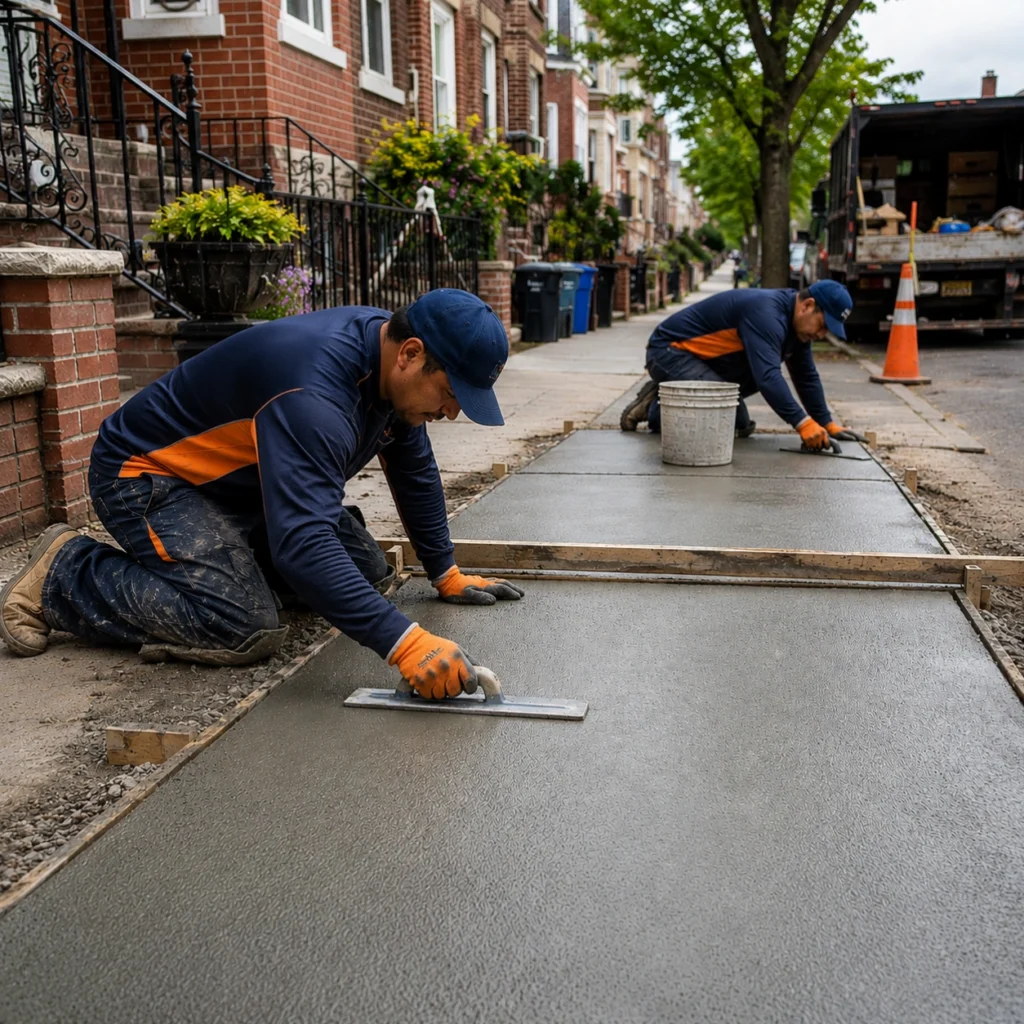
What Concrete Sealing Actually Does
Concrete sealing blocks water, chloride, and oil from entering the pore structure of a slab, which is where nearly all surface damage begins.
Concrete looks solid and behaves like a sponge. A cured slab is full of microscopic capillaries, and those capillaries pull in whatever sits on the surface. Rain gets in. Melted snow carrying road salt gets in. Motor oil, transmission fluid, and dog urine get in. Once liquid is inside the pore network, winter does the rest of the work by freezing it, expanding it, and pushing the top layer of cement paste off the slab.
South Asian Construction Co. treats sealing as maintenance on concrete that is still structurally sound, in the same way you would repoint brick before the wall moves rather than after.
How to Tell If Your Concrete Needs Sealing
Concrete needs sealing when water soaks in and darkens the surface instead of beading on top of it.
Pour a cup of water onto the slab and watch. Water that sits in a bead has a working barrier. Water that flattens, spreads, and darkens the concrete underneath has nothing stopping it. South Asian Construction Co. runs the same test on site along with a closer look at the edges, the joints, and the areas that take the most salt.
Once a surface passes the check, the next decision is which family of sealer belongs on it.
These six signs mean the slab is sound enough to seal and exposed enough to need it.
Sealing a slab in any of these five conditions traps the problem underneath instead of solving it.
What Efflorescence Is Telling You
Efflorescence is a white crystalline deposit left on concrete when moisture moves through the slab and carries dissolved salts to the surface. It is cosmetic on its own, but a slab that keeps producing it is telling you there is a moisture source that a surface sealer will not address. We remove existing efflorescence during prep and flag the pattern if it looks like it will come back.
The Four Sealer Families and What Each One Is ForNew
Concrete sealers fall into four families: penetrating sealers, densifiers, acrylics, and high-build coatings such as polyurethane and epoxy.
The family matters more than the brand name on the pail. A penetrating sealer and an acrylic sealer behave in opposite ways on the same slab, and the difference decides whether the job holds for five years or peels in eighteen months.
Which family lands on your property depends on the surface itself, so here is how we match them.
Penetrating Sealer
A reactive treatment that soaks into concrete and lines the capillary pores without leaving a film on the surface.
Densifier
A silicate solution that reacts with free lime in concrete to harden the surface and reduce dusting.
Acrylic Sealer
A film-forming coating that sits on top of concrete and adds a visible sheen.
High-Build Coating
A thick film-forming system, usually polyurethane or epoxy, that forms a hard wear layer over the slab.
Water-Based or Solvent-Based
Water-based sealers cure with low odor and mild fumes, and solvent-based sealers penetrate deeper but release strong vapours during application.
On an open driveway or a rear yard, either works. Inside a garage, a cellar, or anywhere attached to living space, South Asian Construction Co. defaults to water-based products so you are not clearing the house for a day. We tell you which one we are using and why before the job is booked.
Surfaces We Seal and the Sealer Each One Takes
South Asian Construction Co. seals driveways, stoops, patios, walkways, garage floors, and decorative concrete, matching the sealer family to each surface.
A driveway apron that catches plow spray and a shaded rear yard slab that stays damp until noon need different products. We walk the property, note the exposure on each surface, and price them separately.
Concrete Driveways
Driveways take a penetrating sealer because they carry the heaviest salt load on any residential property.
Plow spray, deicer tracked off the street, and oil drips all land here. A penetrating product keeps the concrete looking untreated while blocking chloride, and it will not peel under tire scrub the way a film does.
Stoops, Steps & Landings
Stoops take a penetrating sealer with no gloss, because a slick step in freezing rain is a liability.
Brooklyn stoops get salted heavily every winter and they are the single most common place we see surface scaling. We seal treads, risers, and the landing, and we keep the finish matte so traction stays where it was.
Patios & Rear Yard Slabs
Patios usually take an acrylic sealer, because appearance matters more here and salt exposure is low.
A rear yard slab sees almost no deicer, so the trade-off shifts toward looks. North-facing yards that stay damp get a breathable product instead, since a sealed film over persistent moisture blushes white.
Garage & Cellar Floors
Garage and cellar slabs take a densifier or a high-build coating, depending on whether you want a hard surface or a finished one.
A densifier stops the chalky dust that comes off a bare interior slab and costs less than a coating. A polyurethane or epoxy system gives you a cleanable, oil-resistant floor. We use water-based products on anything attached to living space.
Walkways & Side Alleys
Walkways and side alleys take a penetrating sealer, and shaded runs often need moss and algae removed first.
The narrow path down the side of a Brooklyn row house stays wet for days after rain and grows a green film that makes it slick. We clean it back to bare concrete, let it dry fully, then seal it.
Stamped & Decorative Concrete
Stamped and coloured concrete needs sealing to hold its colour, and it is the one surface where resealing is not optional.
The sealer on decorative concrete is what keeps the tone rich and the pattern sharp. Let it wear off and the colour goes chalky and flat. We reseal existing stamped work and seal new pours once they have cured.
Whichever surface you start with, the result depends less on the product and more on what happens before it goes down.
Our Concrete Sealing Process, Step by Step
South Asian Construction Co. seals concrete in five stages: assessment, cleaning, repair and drying, application, and cure.
Most failed sealing jobs fail in the first three stages, not the fourth. Sealer applied over dirt, over oil, or over a damp slab lifts within a season no matter how good the product was.
The reason this level of prep is worth paying for comes down to what winter does to bare concrete in this part of the country.
Free On-Site Estimate
We visit the property, run the water absorption test, and check every surface you want treated.
You get a written quote with the sealer family named, the surface areas measured, and the price fixed. We do not quote sealing over the phone. If the concrete is not a candidate, we tell you at this stage and you owe nothing.
Cleaning & Degreasing
We pressure wash the surface and degrease any oil or rust staining before a drop of sealer goes down.
Salt residue, moss, algae, and embedded dirt all block a sealer from bonding. Oil stains need a separate degreaser because water alone lifts nothing. Efflorescence gets removed at this stage rather than sealed over.
Repairs & Full Dry-Down
We patch spalled edges and joints, then let the slab dry completely before application.
Concrete has to be dry through the top layer, not just dry to the touch. Depending on weather that takes 24 to 48 hours after washing. Deeper damage gets scoped as proper concrete repair first.
Sealer Application
We apply the sealer by sprayer and back-roll it, usually in two coats with the manufacturer's dwell time between them.
Back-rolling is what removes puddling and lap marks, and it is the step most crews skip. We mask adjacent brick, siding, and planting beds first. Steps and walkways get a traction grit in the final coat.
Cure & Handover
We keep the surface closed to foot traffic for roughly 24 hours and to vehicles for roughly 72 hours.
We leave cones or tape where the surface faces the street. Before we go, you get the product name, the coverage rate used, and the date the surface is due for its next coat.
Why Road Salt and Freeze-Thaw Break Untreated ConcreteNew
Road salt dissolves in water, carries chloride into concrete pores, and refreezes there, pushing the top layer of the slab off.
The damage is not the salt itself. Chloride lowers the freezing point of the water it dissolves into, so that water stays liquid longer and travels further into the slab before it turns to ice. When it finally freezes, it expands roughly nine percent inside a pore that has no room to give. Do that a few dozen times a winter and the cement paste at the surface breaks its bond and lifts.
New York City runs a long salting season, and Brooklyn adds two more pressures on top of it. Plow spray throws street brine onto driveway aprons and curb cuts. Owners salt their own stoops and walkways because they are liable for what happens on them.
Where Damage Shows Up First
Salt damage appears first at driveway aprons, stoop treads, and the walkway strip closest to the curb.
Those three areas take direct plow spray or direct hand-salting. South Asian Construction Co. sees the same pattern in the repair work year after year. If you are sealing in stages, seal them first and leave the rear yard for a later season.
Best booking window is September to October, ahead of the first salt trucks.
Sealing buys real time on those surfaces, and it is worth being equally clear about what it will not do.
What Concrete Sealing Will Not Do
Concrete sealing protects sound concrete and does not repair damage, stop water rising from below, or resolve a city violation.
Plenty of contractors will sell you sealer on any slab you point at. South Asian Construction Co. would rather lose the sale than take money for a job that will not hold.
It Will Not Repair Damaged Concrete
Sealer does not close cracks, re-level settled slabs, or rebuild a surface that is already flaking off in sheets.
Once scaling has gone past the top few millimetres, the concrete needs resurfacing or replacement, not a coating. We assess slab and foundation condition before quoting so you are not sealing something that needs rebuilding.
It Will Not Stop Water Coming From Below
A surface sealer blocks water landing on top of a slab and does nothing about groundwater pushing up through it.
If your cellar floor is damp with no rain overhead, the water is coming from the ground and the fix is a drainage or membrane system, not a sealer. That work sits on our exterior and below-grade waterproofing page. Sealing a slab with active moisture underneath usually traps it and causes the film to blush white or delaminate.
It Can Make a Wet Surface Slippery
Film-forming sealers such as acrylics and polyurethanes get noticeably slick when wet unless traction grit is added.
This is the trade-off nobody mentions in the sales pitch. On stoops, steps, walkways, and anything that gets winter foot traffic, South Asian Construction Co. either uses a matte penetrating sealer with no film, or adds an anti-slip aggregate to the final coat. We will not put a high-gloss film on a Brooklyn stoop.
It Will Not Close a City Violation
Sealing a flagged sidewalk does not satisfy an NYC DOT violation, which requires the defective section to be repaired or replaced.
If you have received a notice, the flagged flags need proper repair work first. That process is covered on our NYC DOT sidewalk violation repair page. Sealing is something to consider after the repair passes inspection, not instead of it.
Public Sidewalk and Historic District Limits
The public sidewalk in front of your property is held to a city surface standard, and historic districts add a further layer of material review.
A glossy film on a public walkway raises a traction question you do not want attached to your address, so we keep anything out front matte and penetrating. In designated historic districts such as Park Slope, Ditmas Park, and Bedford, exterior surface changes visible from the street can fall under Landmarks Preservation Commission review. We flag it during the assessment and tell you where to confirm. We do not advise on approvals.
When sealing is the right call, the next question is when to do it and how often to come back.
When to Seal, and How Often to Come Back
New concrete needs roughly 28 days to cure before sealing, and most sealed surfaces need a fresh coat every 1 to 7 years depending on the sealer family.
The 28-day wait is the piece most homeowners never hear. Concrete keeps hydrating and releasing moisture for weeks after the pour, and a sealer applied into that moisture either fails to bond or traps the moisture underneath and clouds. Anyone offering to seal a slab poured last week is selling you a job that will not hold.
New Concrete: Wait 28 Days
A newly poured slab should cure roughly 28 days before a penetrating or film sealer is applied.
In cold weather the concrete cures more slowly and the wait stretches. South Asian Construction Co. books new-pour sealing as a return visit rather than rushing it into the same week, and we hold the quoted price for that return.
Best Season to Seal
Sealer applies best between roughly 50 and 90 degrees Fahrenheit on a dry slab with no rain forecast for 24 hours.
In this region that means late spring through early autumn. Booking in September or October gets the surface protected before the salt trucks run. Freezing temperatures stop the job entirely, because sealer will not cure and any trapped moisture will expand.
The Reseal Cycle
Penetrating sealers hold roughly 4 to 7 years, acrylics 1 to 3 years, and high-build coatings 3 to 5 years.
You do not need to guess when it is due. Run the water test once a year. When water stops beading and starts darkening the surface, it is time. Expect to reseal a driveway before a rear yard patio.
Timing set, the next question is what the work actually costs and what moves that number.
The One Exception
Cure-and-seal products are designed to go on within hours of finishing, and they do double duty by holding curing moisture in and leaving a light protective film behind. They are a fair choice on a new pour. They are not a substitute for a proper penetrating sealer later on, and we say which one we are quoting.
What Affects the Cost of Concrete Sealing in Brooklyn
Concrete sealing is priced by square footage, sealer family, and how much surface preparation the slab needs before application.
Every job is priced on site after we measure and test the actual surface. We do not quote sealing over the phone, because the condition of the concrete changes the prep hours and the prep hours change the number.
Total Square Footage
Sealer and labour both scale with area. Sealing a driveway, a stoop, and a walkway together on one visit costs less per square foot than three separate visits.
Sealer Family
Penetrating and densifier products cost more per gallon than acrylics, and they last several times longer. Cheaper up front usually means resealing sooner.
Surface Preparation Required
A clean slab needs a wash and a dry. A slab with oil staining, moss, efflorescence, or old failing sealer needs stripping and degreasing, which adds hours before any product goes down.
Repairs Needed First
Spalled edges, open joints, and damaged sections get patched before sealing. We quote the repair separately so you can see exactly what it costs.
You save on sealing by bundling surfaces into one visit, sealing before damage starts, and choosing a longer-life product.
Whether that spend makes sense depends on what you would otherwise do with the same surface.
Sealing Compared to the Other Options
Sealing is the right choice on concrete that is still sound, and resurfacing, replacement, or a different material makes more sense once damage is structural.
Sealing competes with four other decisions, and one of them is doing nothing. South Asian Construction Co. quotes whichever of these actually fits the slab in front of us.
Which family lands on your property depends on the surface itself, so here is how we match them.
Sealing Is Not Waterproofing
Recent Concrete Sealing Projects
South Asian Construction Co. seals driveways, stoops, patios, and walkways across Brooklyn and Queens, and these three jobs show typical scope.
Every project below started with a written quote after an on-site assessment.
Driveway and Apron Sealing
Pressure wash, oil stain degrease, two-coat penetrating sealer. The apron takes plow spray directly, so it was treated first.
Brownstone Stoop and Landing
Wash, spalled edge patching, two-coat penetrating sealer with anti-slip aggregate. No gloss anywhere on a winter walking surface.
Rear Yard Patio Reseal
Old sealer strip, moss and algae removal, full dry-down, breathable resealing. The original film had trapped moisture and blushed white.
Concrete Sealing Across Brooklyn and Queens
South Asian Construction Co. seals concrete across Brooklyn and Queens from a base at 445 E 5th St in Kensington, Brooklyn.
Exposure changes by street and by block. See areas we serve across Brooklyn for the full list. Every description below is unique. The live page repeats the same four descriptions across eight cards.
Park Slope
Brownstone stoops take heavy hand-salting every winter, and the treads scale before anything else on the property.
Ditmas Park
Detached houses with real driveways and side alleys, which means more square footage exposed to plow spray.
Bay Ridge
One and two family homes with private driveways and curb cut aprons that catch the worst of the street brine.
Kensington
Our home base at 445 E 5th St, and the area we reach fastest for assessments and reseal visits.
Windsor Terrace
Narrow side alleys that stay shaded and damp, where moss removal comes before any sealer goes down.
Bensonhurst
Wide concrete frontages and shared driveways, usually sealed as one bundled visit to keep the cost down.
Borough Park
Large stoops and long walkway runs on tight lots, where access and staging drive the schedule.
Sunset Park
Mixed residential and light commercial frontages, including loading aprons that take constant vehicle traffic.
Concrete Sealing Questions We Get Asked Most
Is concrete sealing actually worth the money?
Yes. We manage the full process: free onsite assessment, concrete repair to NYC DOT specification, and violation closeout coordination. Most violations clear within 1 to 2 weeks of scheduling. We do not charge separately for demo or haul-away — the full scope is in one written quote.
How much does concrete sealing cost?
Pricing depends on square footage, sealer family, and how much prep the surface needs. We measure and test on site, then give you one written number covering cleaning, prep, product, and application. We do not quote sealing over the phone, and the price does not move after you sign it.
Can I just seal the concrete myself?
You can, and on a small clean patio it is a reasonable weekend job. Two things go wrong most often. Homeowners apply sealer over a slab that is not fully dry, and they roll it on too thick, which leaves lap marks and a film that peels. If you do it yourself, wash it, wait 48 hours, and apply thin coats.
Will sealing change how my concrete looks?
Penetrating sealers leave the appearance unchanged. Acrylics and polyurethanes darken the concrete and add a satin or gloss sheen, which is often the point on a patio or a stamped surface. We tell you which one we are quoting and show you what the finish looks like before you commit.
Can you seal concrete in winter?
No. Sealer needs a dry slab and temperatures roughly between 50 and 90 degrees Fahrenheit to cure properly. Applying it in the cold leaves an uncured film that fails within weeks. The best window in this region runs from late spring through early autumn, and sealing in September or October gets the surface protected ahead of the salting season.
Why did my last sealer peel off?
Peeling almost always traces to prep rather than product. Sealer applied over a damp slab, over oil residue, or over an old incompatible coating cannot bond, so it lifts in sheets. Applying a film too thick causes the same result. We strip failed sealer back to bare concrete before resealing rather than coating over it.
Do you seal concrete in Queens as well as Brooklyn?
Yes. South Asian Construction Co. works across both boroughs from 445 E 5th St in Brooklyn, covering Astoria, Jackson Heights, Woodside, Ozone Park, Richmond Hill, Fresh Meadows, and the surrounding areas.
How soon can I walk on it and park on it?
Plan on roughly 24 hours before foot traffic and roughly 72 hours before vehicles. We leave cones or tape where the surface faces the street and confirm the exact timing on the day, since temperature and humidity both affect the cure.
If your concrete needs work beyond sealing, these are the pages to look at next.
Related Concrete Services
Stamped & Decorative Concrete
Stamped and coloured surfaces depend on sealer to hold their tone, which makes resealing part of owning them.
Patios & Walkways
New patio and walkway installation across Brooklyn and Queens, ready to seal once cured.
Concrete Driveways
Driveway installation and repair, including the aprons that take the heaviest salt load on the property.
Sidewalk Repair & NYC DOT Violations
Cracked, lifted, or flagged sidewalk sections need repair before sealing is worth considering.
Steps, Stoops & Staircases
Stoop rebuilds and step repair for brownstones and row houses, sealed once the new concrete cures.
All Concrete Services
Every concrete service South Asian Construction Co. provides across Brooklyn and Queens in one place.
Ready to protect your concrete before the next salt season?
Free on-site assessment · Written quote before any work starts · No phone estimates